Lost in PeachTree (LPT).

Prototype, User Research.

Lost in PeachTree (LPT).

Prototype, User Research.

Lost in PeachTree (LPT).

Prototype, User Research.
ROLE

Designer

Designer

DESIGN TOOLS

Figma

Figma

TIMELINE

5 Weeks

5 Weeks

Team

Andrew George Geevarghese

Andrew George Geevarghese

Chen Zhao

Chen Zhao

Jingyun Hu

Jingyun Hu

Xiaolu Zhang

Xiaolu Zhang

OVERVIEW

Planning a night out should feel exciting, but for many young adults it can feel overwhelming.


First-time club-goers often struggle to decide where to go, what kind of atmosphere to expect, and whether the experience will actually match their preferences. Information about events is scattered across social media, ticketing platforms, and individual club websites, making the process of planning a night out fragmented and uncertain.


Lost in Peachtree explores how design can make nightlife more approachable by creating a curated platform that helps young adults discover, plan, and attend events with confidence.

Planning a night out should feel exciting, but for many young adults it can feel overwhelming.


First-time club-goers often struggle to decide where to go, what kind of atmosphere to expect, and whether the experience will actually match their preferences. Information about events is scattered across social media, ticketing platforms, and individual club websites, making the process of planning a night out fragmented and uncertain.


Lost in Peachtree explores how design can make nightlife more approachable by creating a curated platform that helps young adults discover, plan, and attend events with confidence.

THE challenge

This project began with the prompt to design a mobile UI kit for a nightclub in Atlanta. However, as we began exploring the space, we realized that simply creating interface components for a single venue would not address the larger challenges users experience when navigating nightlife.


Instead of focusing on a single club, we reframed the challenge around the broader experience of nightlife discovery.

This project began with the prompt to design a mobile UI kit for a nightclub in Atlanta. However, as we began exploring the space, we realized that simply creating interface components for a single venue would not address the larger challenges users experience when navigating nightlife.


Instead of focusing on a single club, we reframed the challenge around the broader experience of nightlife discovery.

THE insights

The biggest friction in nightlife happens before someone even enters the club.

Choosing a nightclub for the first time can be difficult, intimidating and overwhelming.

There are countless venues, each with different atmospheres, music styles, and events.

For first-time attendees, it’s difficult to know what to expect. Anxiety often stems from uncertainty, not knowing the vibe, the dress code, the crowd, or whether the music will match their taste.

Nightlife discovery currently rewards confidence, not curiosity.

⭐️

Connect to Content

Add layers or components to make infinite auto-playing slideshows.

Ticket purchasing is fragmented

Many clubs rely on third-party platforms for ticketing.

Users are redirected to unfamiliar websites, asked to create new accounts, re-enter billing information, and trust platforms they’ve never used before.

This disrupts the flow of planning and reduces trust in the experience.

Nightlife events are not curated, hard to discover and exist on different platforms.

Nightlife discovery exists across scattered platforms with inconsistent quality control.

Reviews are often unreliable, and there’s no central space that thoughtfully curates events based on experience and vibe.

The system felt transactional, not experiential.

THE SOLUTION

Lost in Peachtree is a curated nightlife brand designed specifically for Gen Z.

Instead of listing every available event, LPT handpicks and hosts high-quality, vibe-driven experiences at Atlanta nightclubs. Every event is selected intentionally, based on music, atmosphere, and energy, so users don’t have to guess what they’re walking into.

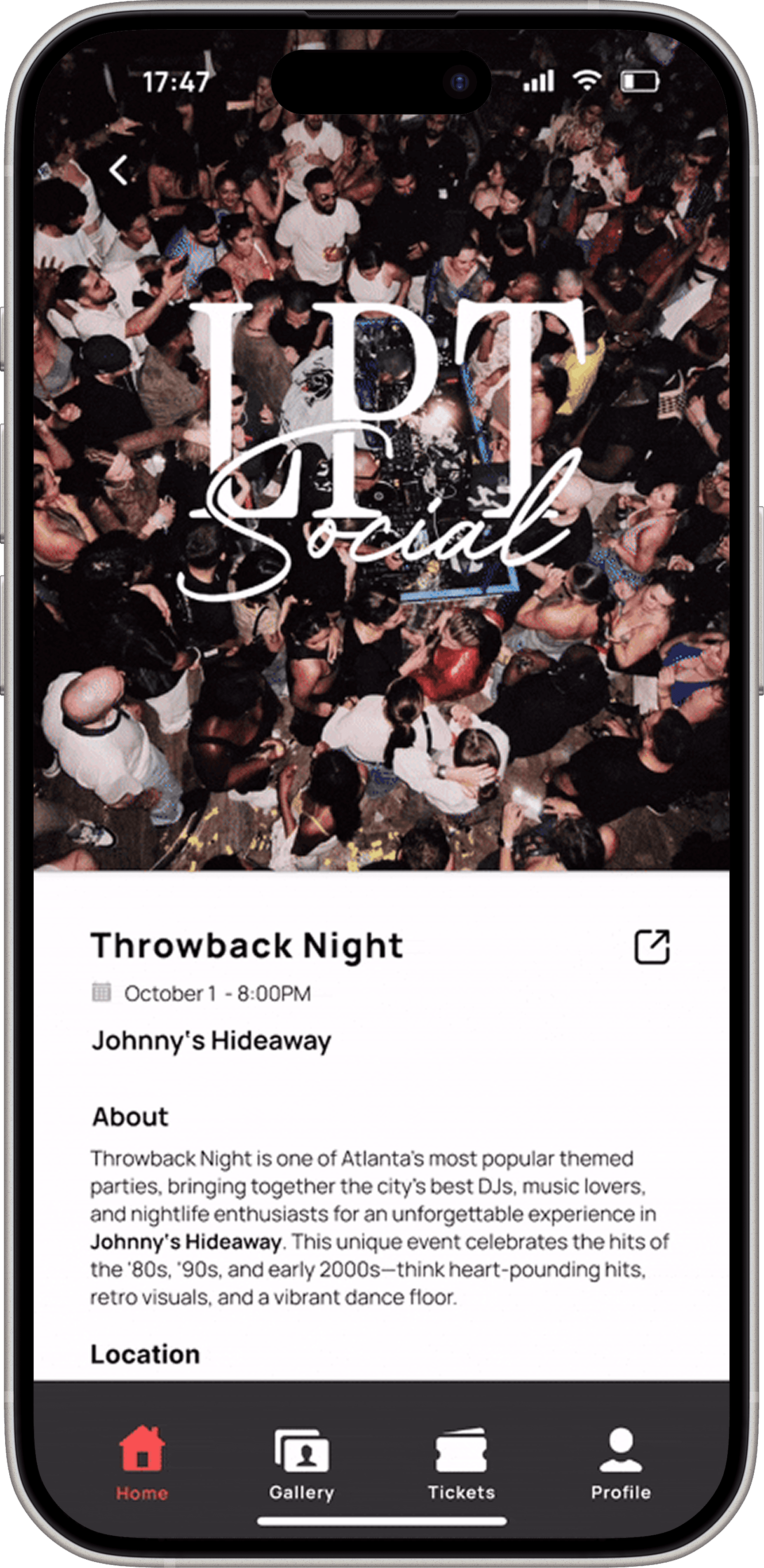
Discover events that match your vibe.

Users explore curated events directly in the app.

Instead of relying on unreliable reviews or scattered listings, each event provides clear information about:

• Music
• Atmosphere
• Crowd
• Venue details

By replacing ambiguity with transparency, nightlife becomes easier to navigate.
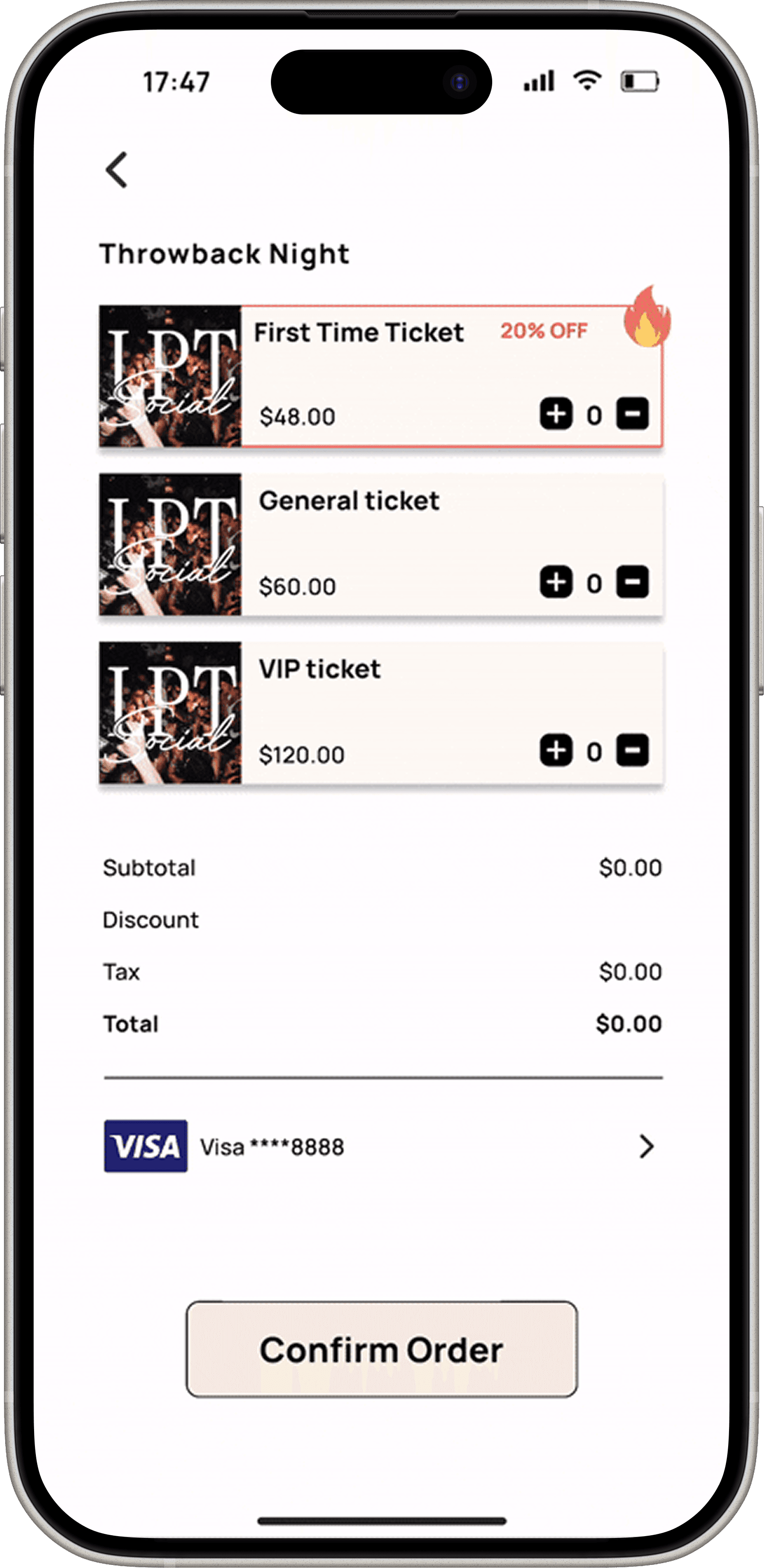
A seamless ticketing experience.

Ticket purchasing often happens across multiple platforms. Lost in Peachtree brings everything into one secure flow.


Users can:

• Discover events
• Purchase tickets
• Access entry passes


No redirects. No account juggling. No uncertainty.

Built for first-time users.

One of our biggest insights was simple: Uncertainty creates anxiety.

So we designed the platform to answer questions before users even ask them.


Clear event descriptions, intuitive navigation, and accessible ticket storage help users feel prepared, transforming a stressful experience into something exciting.
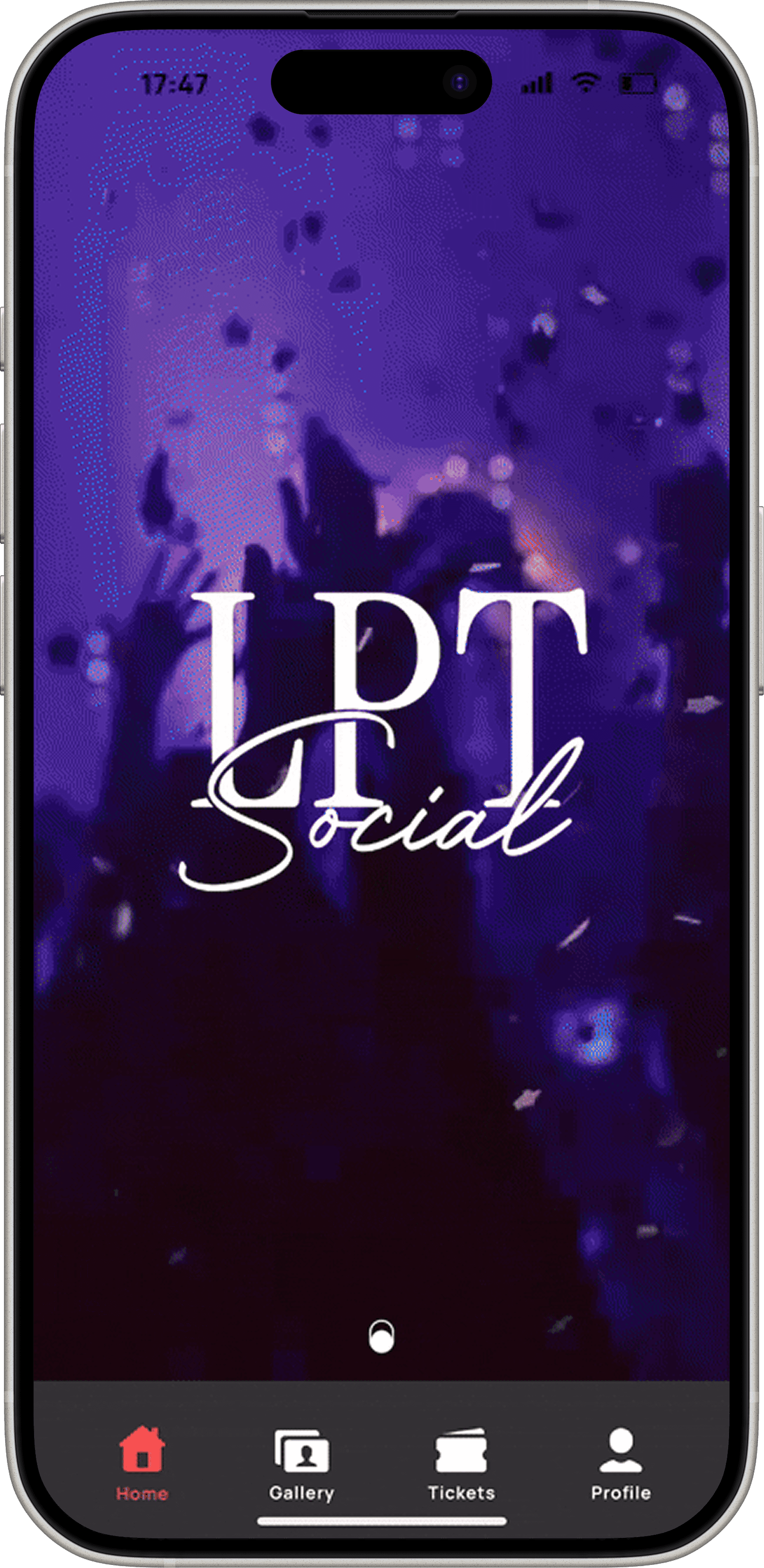

THE EXPERIENCE
DISCOVERY

Users browse curated events that match their interests, with clear descriptions of music, atmosphere, and venue details.

Users browse curated events that match their interests, with clear descriptions of music, atmosphere, and venue details.

PLANNING

Instead of navigating multiple websites, users can view event details, coordinate with friends, and purchase tickets in one place.

Instead of navigating multiple websites, users can view event details, coordinate with friends, and purchase tickets in one place.

ATTENDANCE

Tickets are stored within the platform, making entry into events simple and convenient.

Tickets are stored within the platform, making entry into events simple and convenient.

RETURN

By highlighting upcoming events and building a recognizable brand identity, the platform encourages repeat engagement.

By highlighting upcoming events and building a recognizable brand identity, the platform encourages repeat engagement.

reflection
reflection

This project reinforced the importance of questioning the initial problem before jumping into design solutions. By stepping back and examining the broader experience surrounding nightlife, we were able to shift the project from a simple UI kit to a more meaningful exploration of how digital products can shape social experiences.

Designing for nightlife is ultimately about designing for emotion. When uncertainty is removed, anticipation and excitement can take its place.