Prototype, User TESTING
ROLE
DESIGN TOOLS
TIMELINE
OVERVIEW
PROBLEM STATEMENT
DESIGN SOLUTION
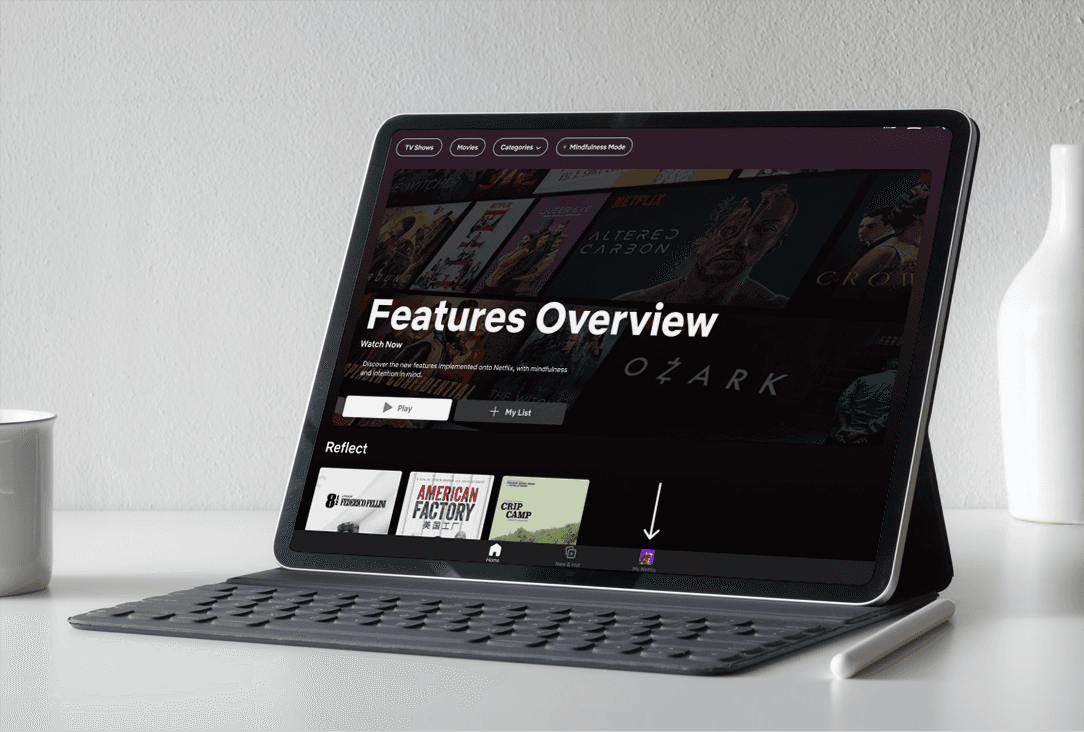
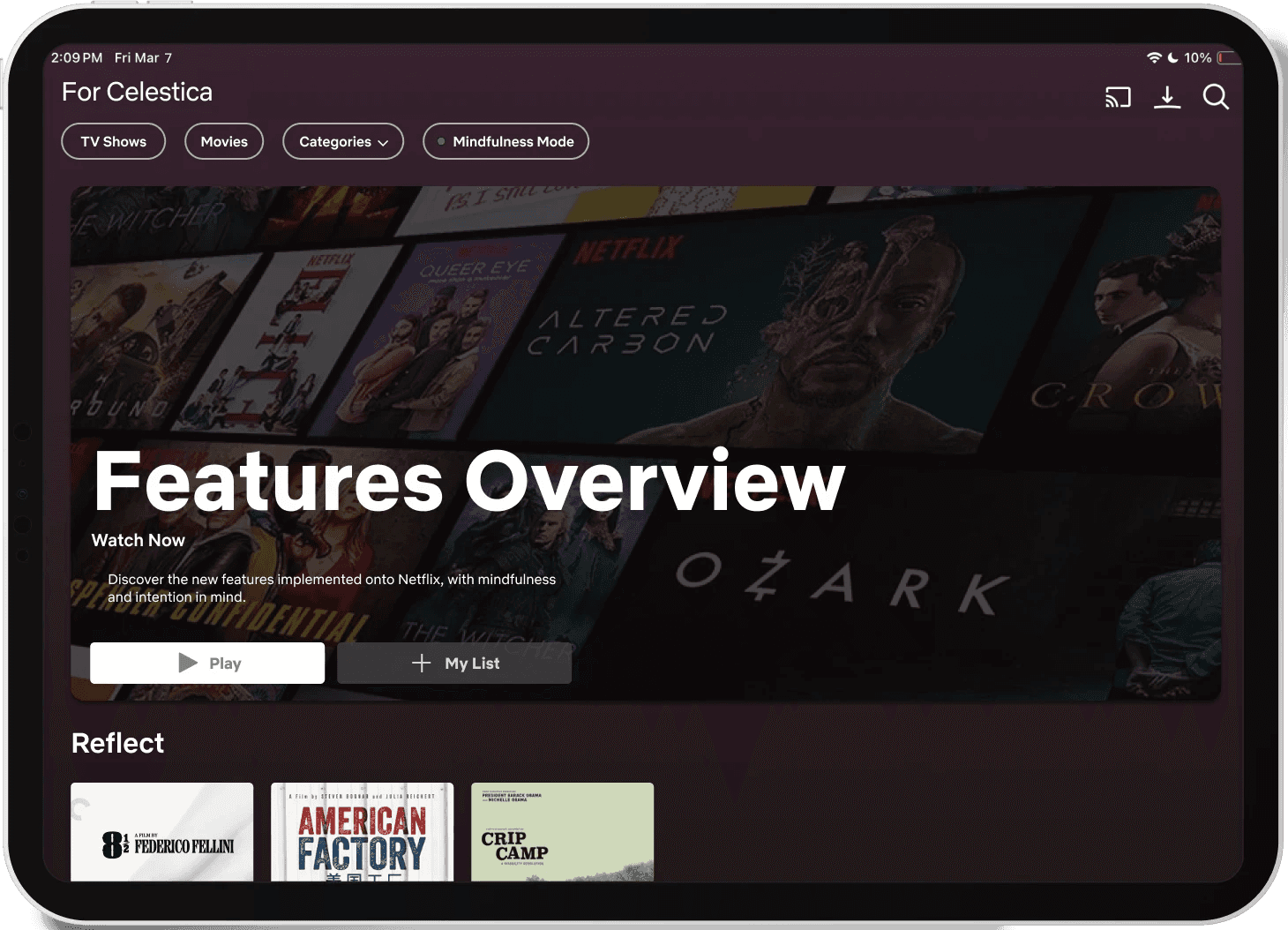
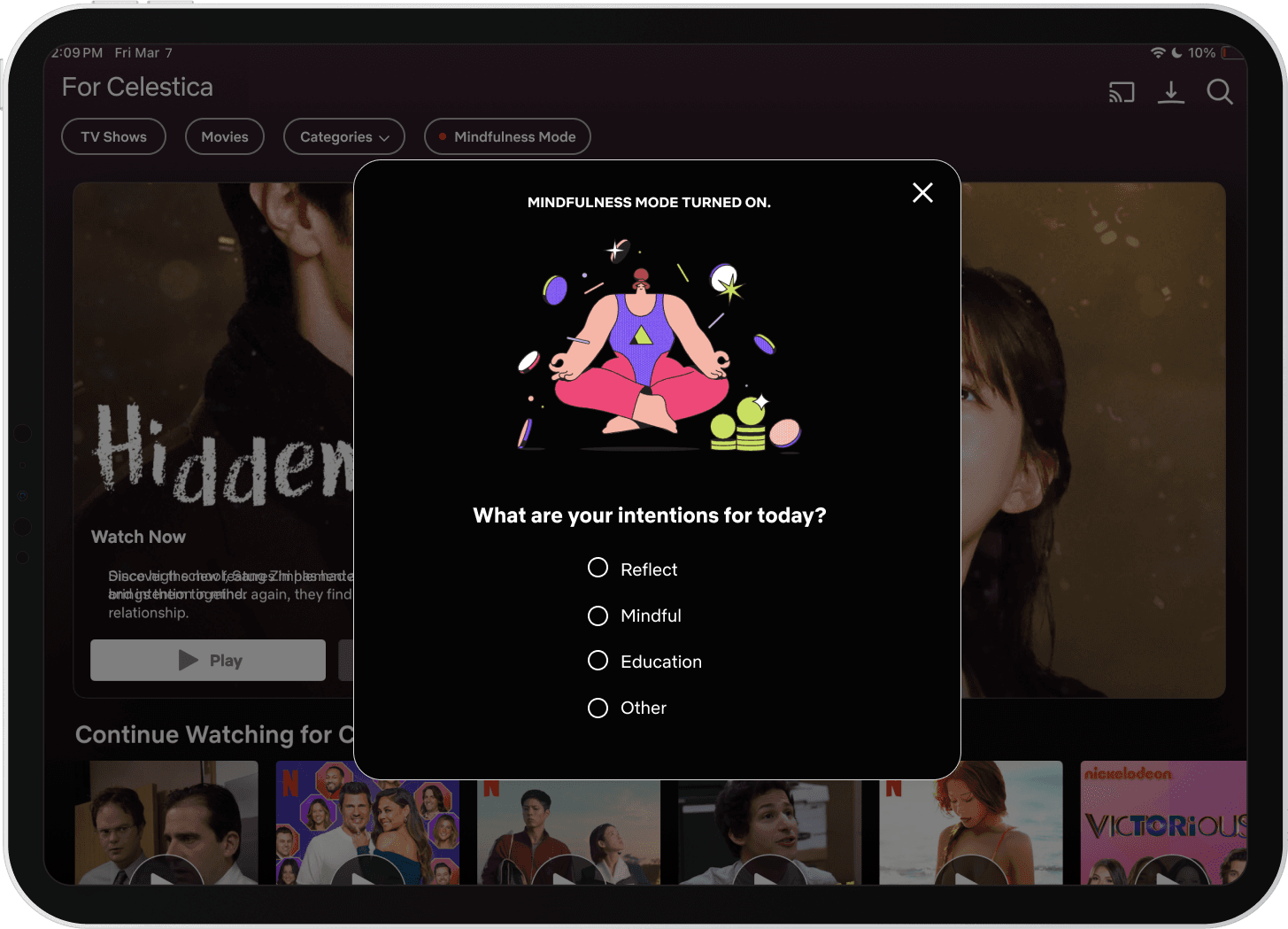
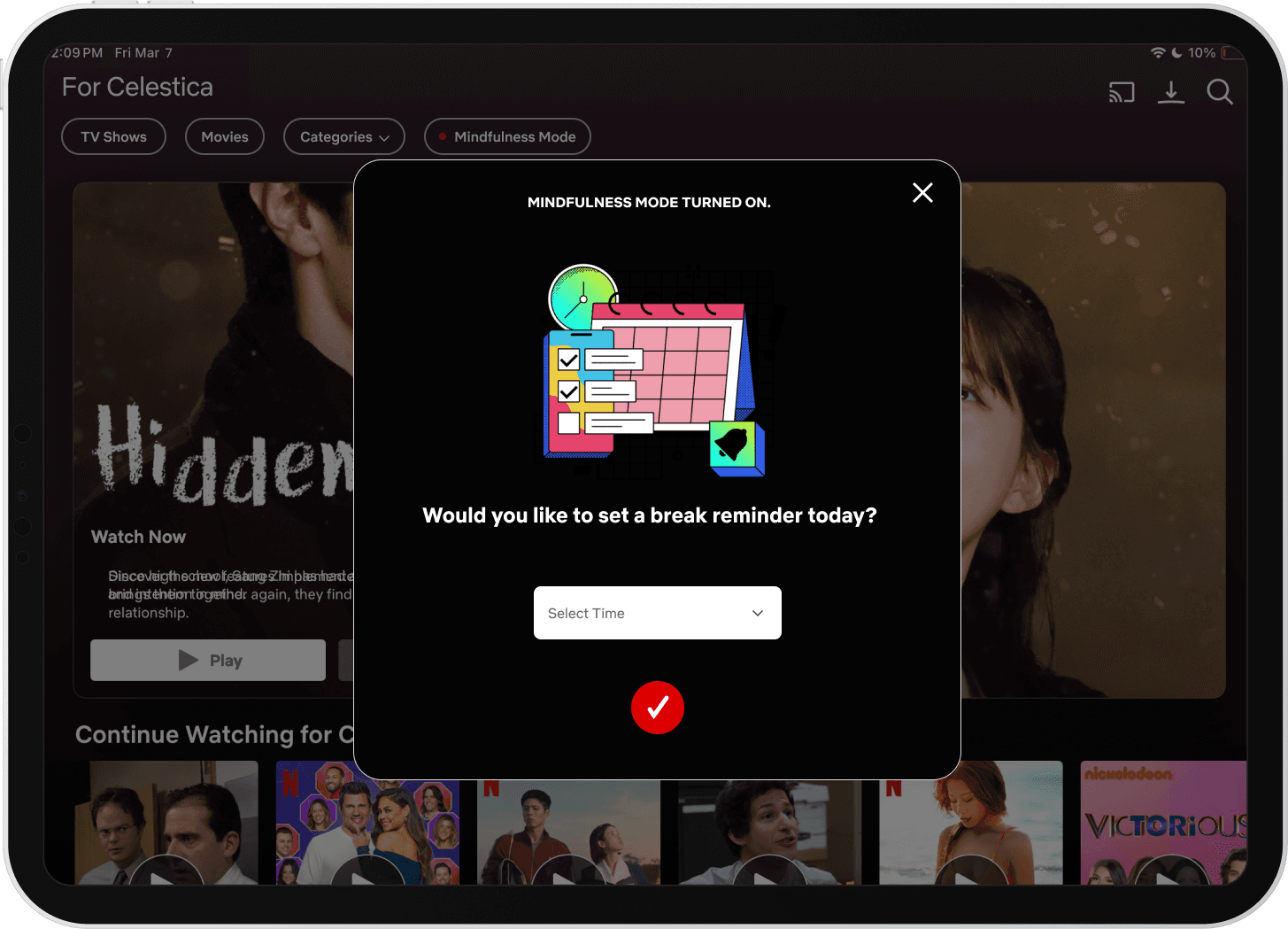
Mindfulness Mode
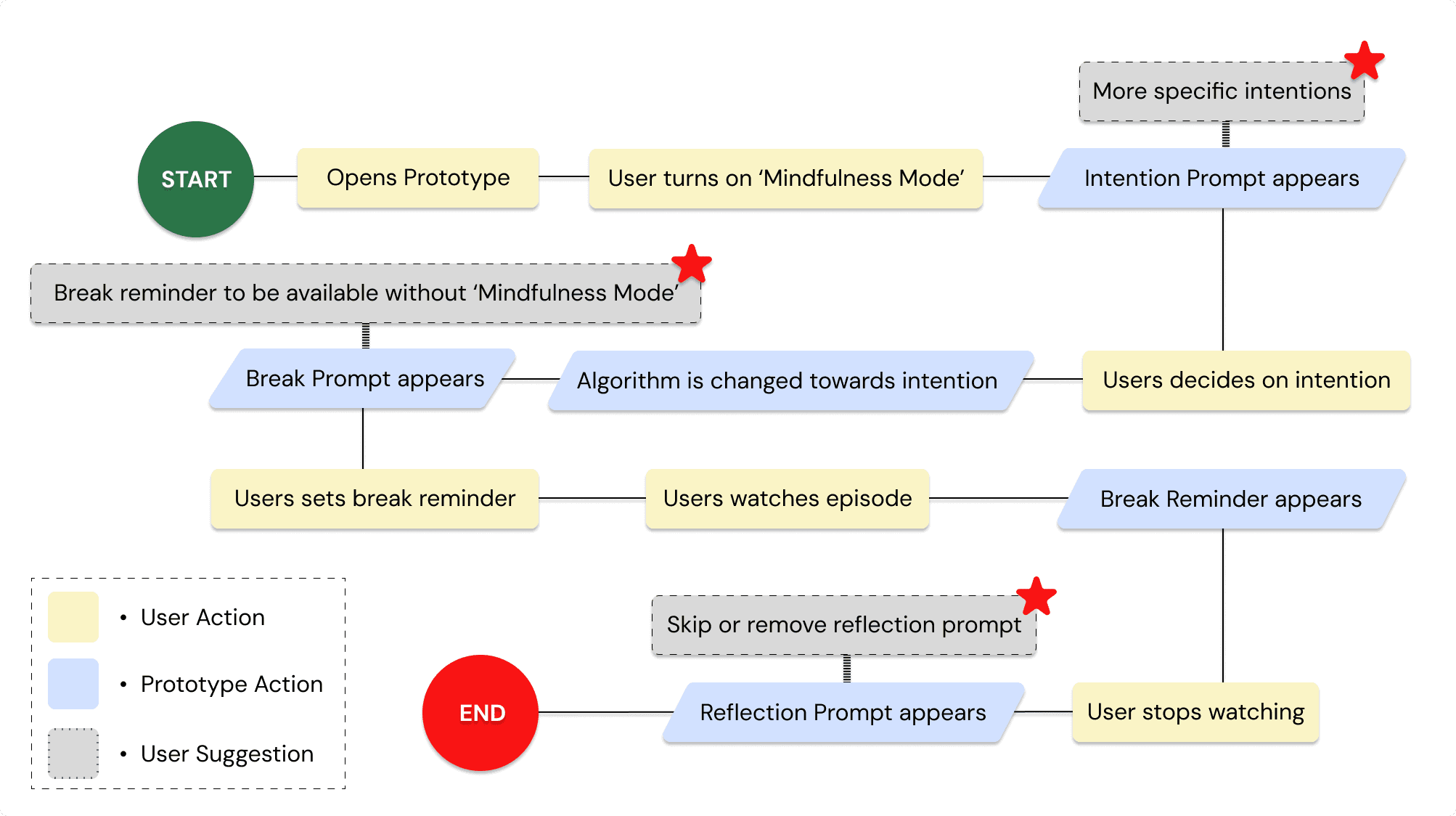
In mindfulness mode users are able to easily turn on and off the new added features.
This allows users looking to continue their regular streaming services to do so without interruption.
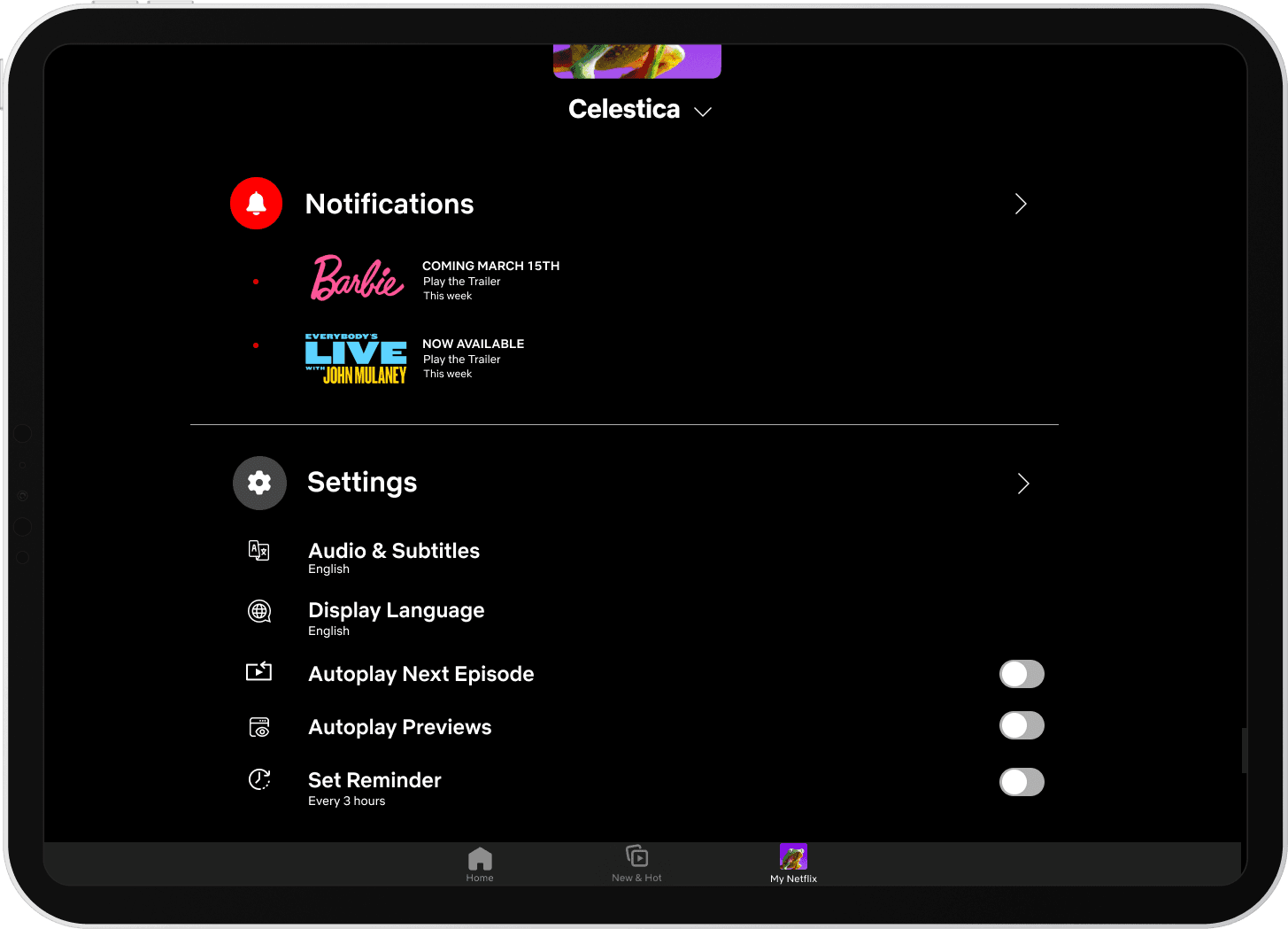
Disabling Autoplay.
Users are able to easily access autoplay on their profile screen, removing the barriers from doing some from the current app.
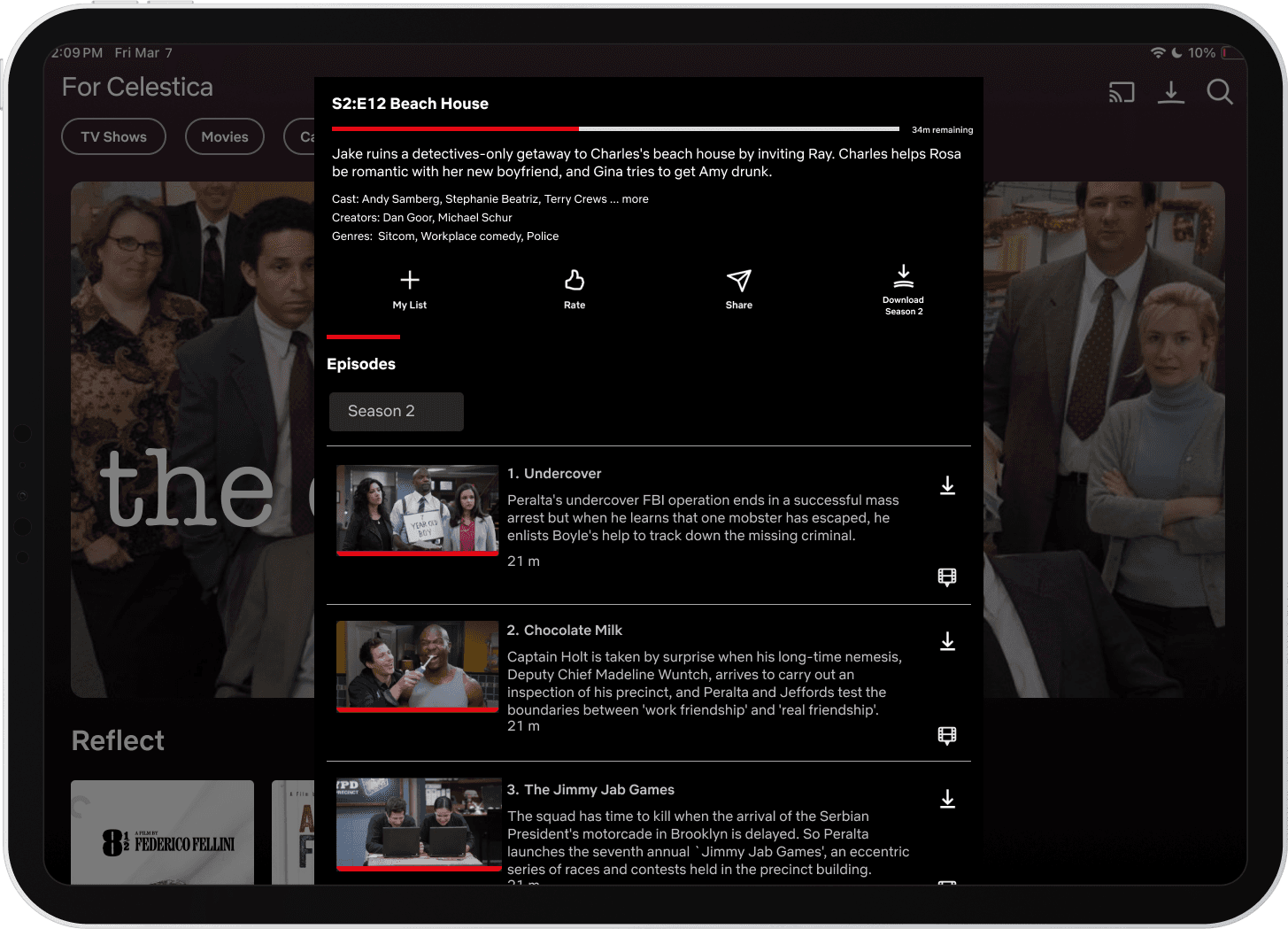
Video Summaries.
Users are able to access short video summaries, showing the most significant parts of the video.
This allows users to consume content in shorter bursts.
Redesigning Business Models.
As part of this mindful redesign project, I also rethought Netflix’s business model to allow for a more sustainable, inclusive, and adaptive approach to entertainment.
With growing subscription fatigue, shifting user expectations, and increased competition, a redesigned model can better align with diverse user needs, offer more flexible access, and promote long-term value beyond content consumption—fostering deeper engagement and social responsibility.
Tier-based Subscription Model.
- Free Tier (Ad-Supported) : Users get access to a limited content library with ads. This is ideal for those who cannot afford a subscription but still want access to some content.
- Staggered Content Release : Popular series or films will be released weekly, with first access granted to higher-tiered customers. This aims to combat binge-watching by allowing time for reflection and discussion.
- Mindfulness Modes : Each tier will have a mindfulness mode designed to encourage healthy content consumption
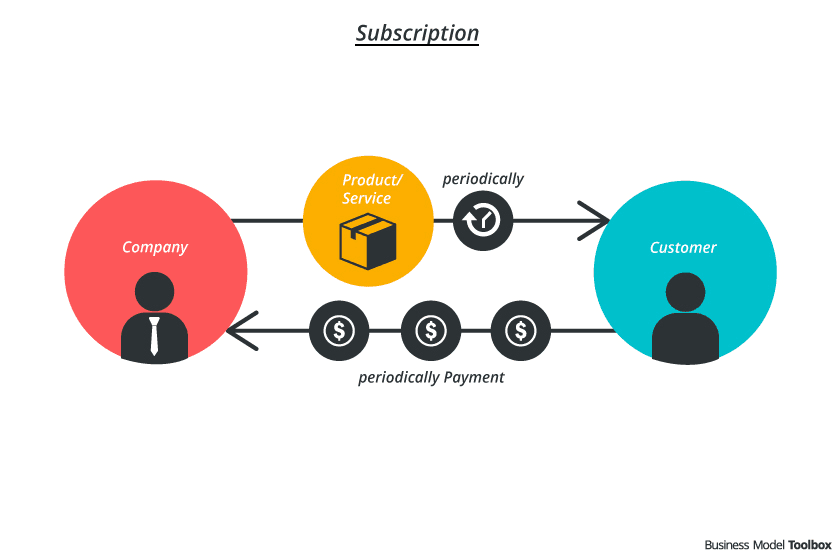
Toolbox via Charge Bee
Access Research and Rationale
RATIONALE
History of binge-watching.
While binge-watching culture truly started with Netflix, its root go back to the beginning of television. As scholars and experts have noted, the evolution of binge-watching isn't simply a product of technology, but a “carefully orchestrated cultural shift” (Alam, 2024).
Theodor W. Adorno’s early warnings about the hidden mechanisms of television and its psychological impact seem very relevant in the context of today’s streaming platforms (Pitre, 2019). These platforms are not just offering content—they are actively engineering how we engage with it, using complex algorithms to personalize viewing experiences and optimize the user’s time spent in front of the screen.
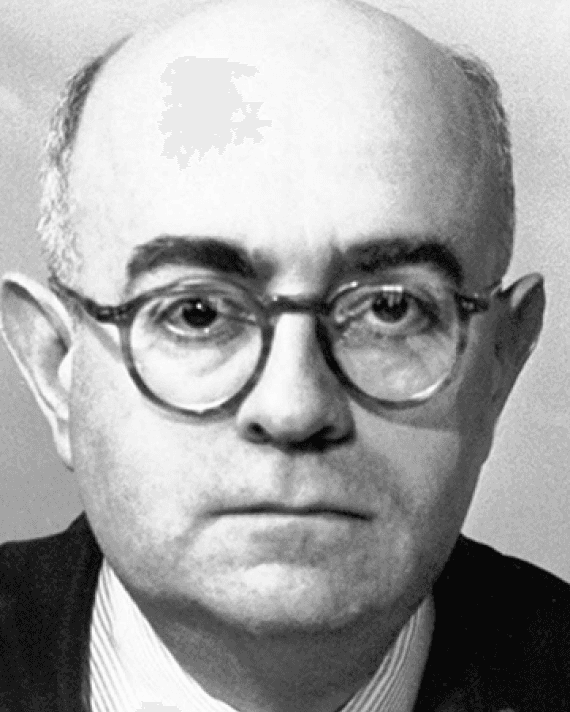
Theodor W. Adorno
By exposing the socio-psychological implications and mechanisms of television, often operating under the guise of fake realism, not only may the shows be improved, but, more important possibly, the public at large may be sensitized to the nefarious effect of some of these mechanisms.
Television is no longer just a device that entertains—it’s a powerful force that structures our viewing experiences and our social interactions (Alam, 2024). In a world where personalized algorithms determine what we see and when, the line between individual choice and manipulation becomes increasingly blurred.
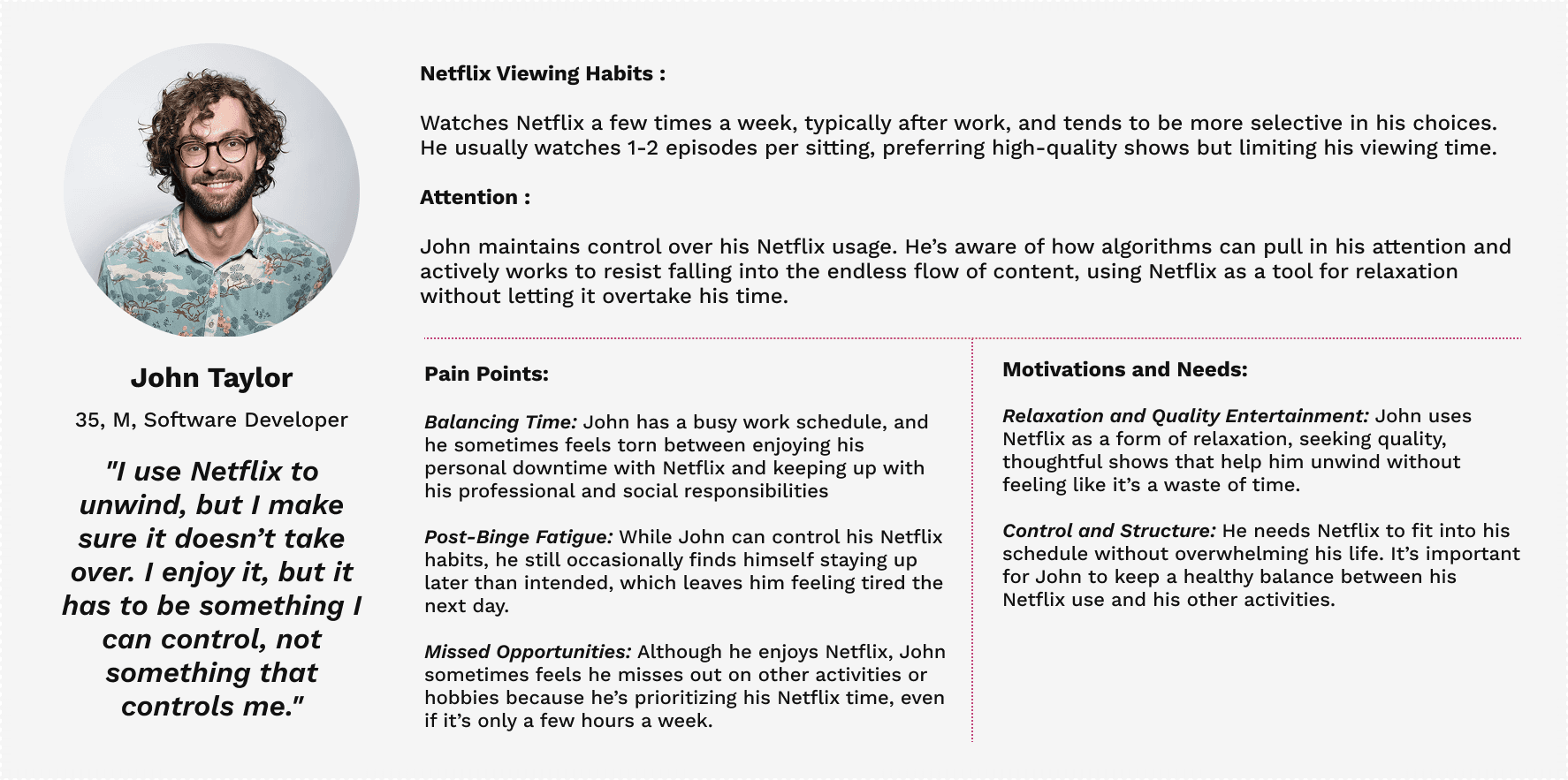
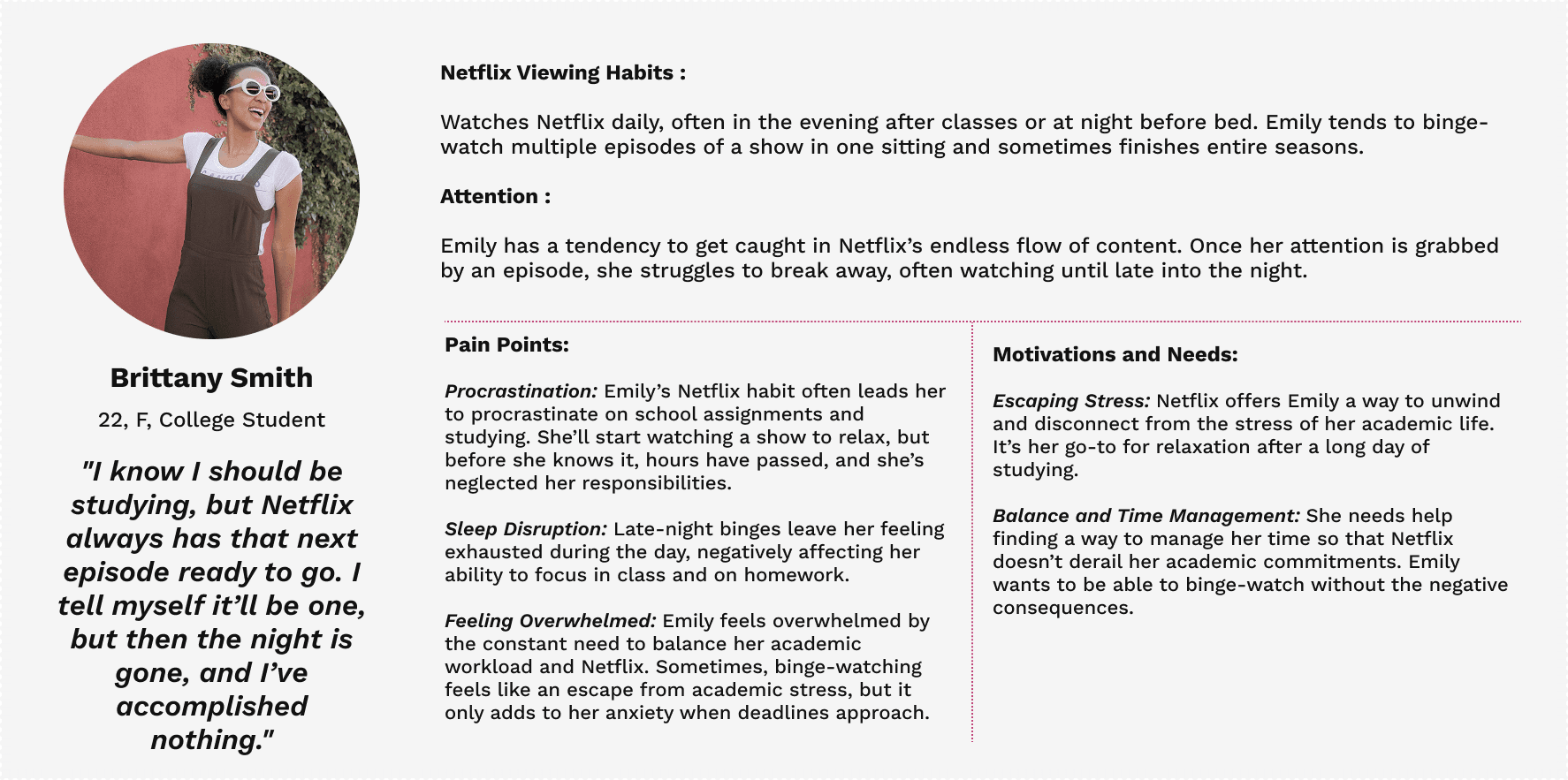
PERSONAS
Interviews
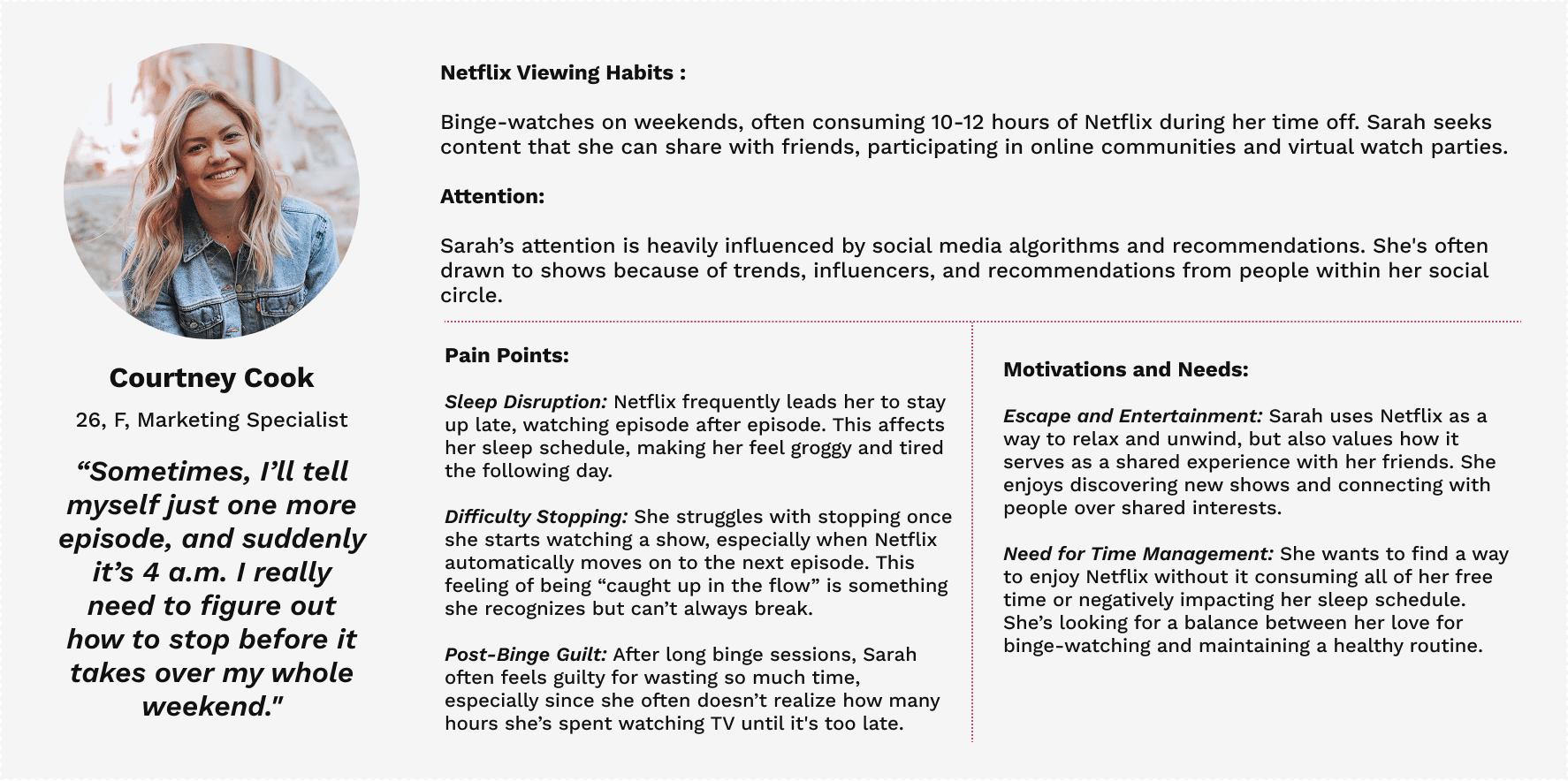
Interviewing real users was a key part of developing authentic and relevant personas for my mindfulness prototype. Through these conversations, I gained valuable insights into their daily routines, stressors, and personal approaches to mindfulness. This allowed me to move beyond assumptions and create user personas that truly reflect the needs, motivations, and challenges of the people I’m designing for—ensuring a more empathetic and user-centred solution.
TESTING
With the redesigned business model and user research, I was able to develop the first iteration of the redesigned prototype.
A/B User Testing.
Percieved Mindfulness
Emotional Response